
Maine Coon Stressed? Signs, Causes And How To Calm Them.


Maine Coons are usually described as confident, sociable, and laid-back, but they can still experience fear, anxiety, and chronic stress. Some react obviously by growling, fleeing, or hissing. Others become unusually quiet, hide away, stop playing, eat less, or avoid being touched.
Maine Coons can present present stress very different. Some hide when pain makes them feel vulnerable. Some growl when the doorbell rings and then they run away. Some are frightened by the robot vacuum where others ride on top of it. Some say hello to strangers where others go hide.
Those differences teach an important lesson: there is no single “Maine Coon stress personality”. The trigger may be pain, an unfamiliar sound, another cat, a visitor’s scent, poor early socialisation, boredom or a loss of control.
Quick Answer
A stressed Maine Coon may hide, crouch, flatten their ears, develop wide pupils, growl, hiss, overgroom, eat less, avoid people, toilet outside the litter tray or become unusually clingy or aggressive.Remove the immediate trigger where possible, provide a quiet, safe place, keep resources and routines predictable, and do not force physical contact. Sudden changes in behaviour should be treated as a possible medical problem, especially when accompanied by pain, loss of appetite, or changes in litter tray use.Any cat that repeatedly strains to urinate, cries in the litter tray, or produces little or no urine needs urgent veterinary attention. A complete urinary blockage is an emergency and is particularly common in male cats.
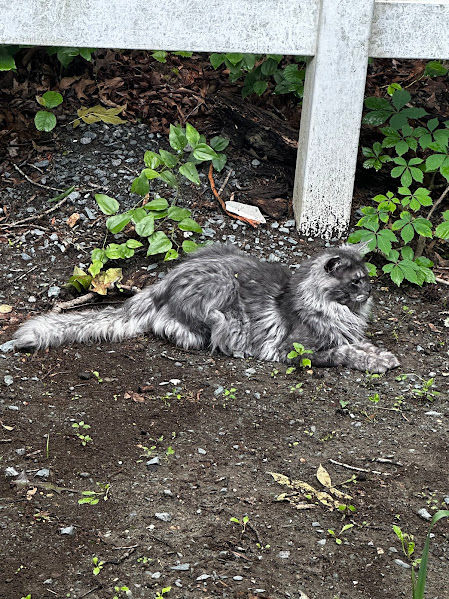
Mika, our Maine Coon cat, likes to growl at delivery drivers, then run away!!
Normal Behaviour Vs Signs Of Stress
Relaxed Maine Coon | Possible Stress Sign |
Rests in familiar, open places | Suddenly hides in unusual or inaccessible places |
Eats and drinks normally | Eats less or refuses food |
Plays in their usual way | Stops playing or becomes unusually restless |
Approaches familiar people | Avoids contact, freezes, or runs away |
Uses the litter tray normally | Toilets elsewhere or repeatedly visits the tray |
Accepts their usual handling | Flinches, growls, or swats when touched |
Ears and whiskers look relaxed | Ears flatten, pupils widen, and body crouches |
Vocalises normally | Starts growling, hissing, or calling unusually |
This explains that stressed cats may hide or seek height, flatten their ears, and show wide pupils. Changes from your cat’s normal behaviour matter more than any isolated gesture.
How Long Should Stress Last?
A brief reaction after a loud noise may settle within minutes or hours. After a vet visit, guests or building work, a cat may need a day or two to return completely to normal.
Minutes to hours: Usually reasonable after a brief fright if your cat begins relaxing when the trigger ends.
One to three days: Continue providing quiet, routine, and choice. Behaviour should gradually improve.
More than a week: Look for a repeating trigger and seek veterinary advice if the behaviour is unusual.
Two weeks or longer: Chronic stress, pain, or illness becomes more likely.
Sudden severe signs: Contact a vet immediately rather than waiting.
Stress Or Pain?
Stress and pain can look almost identical in cats.
When a normally confident cat begins hiding, that could be signs of pain. When to suspect pain, you watch for a:
Sudden change in temperament
Protecting one body area
Reluctance to jump
Reduced appetite
Altered toileting
Poor grooming
Aggression when touched
If these signs are new, consult your vet before assuming the problem is purely emotional.
Common Causes Of Maine Coon Stress
1. Loud Or Unfamiliar Sounds
Vacuum cleaners, fireworks, thunderstorms, building work, delivery vehicles, and unfamiliar footsteps can all trigger fear.
Do not trap a frightened cat beside a noise to make them “get used to it”. Let them leave, provide a safe room, and introduce distant sounds gradually only while they remain relaxed.
2. Visitors And Unfamiliar Scents
Cats assess visitors through posture, movement, voice, and scent. A person can behave perfectly around cats and still smell unfamiliar or alarming.
The visitor may have carried the smell of another animal, strong products, or an environment Bali associated with danger. Ask guests not to stare, reach over the cat, or pursue them. Let the cat decide whether to approach.
3. New Cats And Social Pressure
Inter-cat tension is not always a fight. It can involve staring, blocking a doorway, taking preferred resting places, or making another cat hesitate before approaching food, water, or litter trays.
Provide separate feeding stations, several water points, multiple resting areas, and vertical escape routes. Aim for one litter tray per cat, plus one extra. A large, room can also create valuable vertical territory and give each cat more choice over where to rest.
4. Moving Home And Environmental Change
Moving house commonly unsettles cats, but individual reactions vary.
When moving, begin with one secure room containing familiar bedding, food, water, litter, and scratching options. Expand access gradually and keep feeding and play routines consistent.
5. Loneliness, Boredom, And Routine Disruption
Maine Coons are intelligent and often strongly bonded to their families. Too little stimulation or a sudden change in companionship can result in excessive calling, destructive behaviour, overgrooming, restlessness, or withdrawal.
Provide short daily hunting-style play, puzzle feeding, climbing spaces, and predictable interaction.
6. Poor Litter-Tray Conditions
A tray that is dirty, too small, scented, covered, noisy, or guarded by another pet can create stress. Maine Coons also need genuinely large trays; many standard products are too cramped.
Never punish toileting accidents. They can reflect illness, pain, fear, or an unsuitable setup.
Repeated trips, straining, crying, blood, or little urine are different from a simple tray preference. explains that urethral obstruction is potentially life-threatening and occurs more often in male cats because their urethra is longer and narrower.
How To Calm A Stressed Maine Coon
What To Do In The First 30 Minutes
Remove or reduce the trigger. Turn off the vaccum, move other animals away, close curtains, or ask visitors to give the cat space.
Provide a safe retreat. Use a quiet room with water, a litter tray, bedding, and a covered hiding option.
Stop physical pressure. Do not pick the cat up, pull them from hiding, or repeatedly stroke them.
Lower noise and movement. Keep children, visitors, and other pets away until the cat begins relaxing.
Offer, but do not force, food or play. A treat or short wand-toy session may help once the cat is receptive.
Check for medical warning signs. Look at appetite, movement, urination, breathing, and response to touch.
What Not To Do
Avoid:
Dragging a cat from hiding
Punishing hissing, growling, or toileting accidents
Holding a frightened cat tightly
Blocking escape routes
Repeated full-intensity exposure to the trigger
Changing several things at once
Assuming sudden withdrawal is “just their mood”
Using essential oils around cats
Hiding and fleeing are coping behaviours. Removing those options can turn fear into defensive aggression.
Building Long-Term Confidence
Confidence develops through safety, predictability, and successful experiences.
Keep meals and play within consistent time windows.
Let your cat initiate and end physical contact.
Provide high and low hiding places.
Spread resources around the home.
Use puzzle feeders and manageable challenges.
End play with a successful catch.
Prepare a safe room before predictable noise or visitors.
Introduce new pets slowly.
Reward calm investigation without luring the cat too close to danger.
For indoor cats, combine mental enrichment with suitable physical activity.
When To Contact A Vet
Arrange veterinary advice when:
Stress signs are sudden or out of character
Hiding persists without a clear, harmless trigger
Your cat eats substantially less or stops eating
There is vomiting, diarrhea, weight loss, or lethargy
Touching one area causes pain or aggression
Jumping, climbing, or walking changes
Overgrooming causes bald or sore skin
Toileting behaviour changes
Home adjustments have not helped within one to two weeks
Seek emergency help for inability to urinate, repeated straining, collapse, severe breathing difficulty, repeated vomiting, or profound weakness.
Frequently Asked Questions
Why Is My Maine Coon Suddenly Hiding?
A short-term fright may be responsible, but sudden hiding can also indicate pain or illness. Check appetite, movement, toileting, and sensitivity to touch.
Why Is My Maine Coon Scared Of The Vaccum?
Vaccums are loud, mobile, and unpredictable. Cats with limited early exposure may find them particularly frightening.
Can Stress Cause Urinary Problems?
Stress is associated with some feline lower urinary tract problems, but urinary signs can have other causes. A male cat that strains or cannot urinate requires emergency treatment.
Should I Comfort My Stressed Maine Coon?
Offer calm company, but do not force cuddles. Sit nearby and let your cat choose whether to approach. Some cats find touch reassuring; others need distance.
Can A Maine Coon Recover From Poor Socialisation?
Confidence can improve greatly with predictable routines, choice-based handling, safe hiding places, play, and positive associations. Some sensitivities may remain, so success means reduced panic rather than expecting complete fearlessness.
Final Thoughts
A stressed Maine Coon is communicating that something feels unsafe, painful, or beyond their control.
Do not punish the response. Identify the trigger, rule out pain, protect key resources, and give your cat genuine choice.
The goal is not to force a Maine Coon to tolerate everything. It is to create a home in which they can retreat, recover, and gradually feel safe again.


Comments